
Your Gateway to Growth and Success!
Your Gateway to Growth and Success!


Ultimate Smile
theultimatesmiledesign@gmail.com
7265888877
Plot No. 1 to 8, Marutidham Industrial Estate, Behind Hotel Royal, Velanja Road, Umra, Surat - 394130 Surat - 394130
Smile design has become an important part of modern cosmetic and restorative dentistry. It helps dentists plan changes to the teeth and smile before starting treatment.
But smile design offers more than a preview of the final smile. It can improve treatment planning, communication, predictability, and the overall relationship between the teeth, gums, lips, and face.
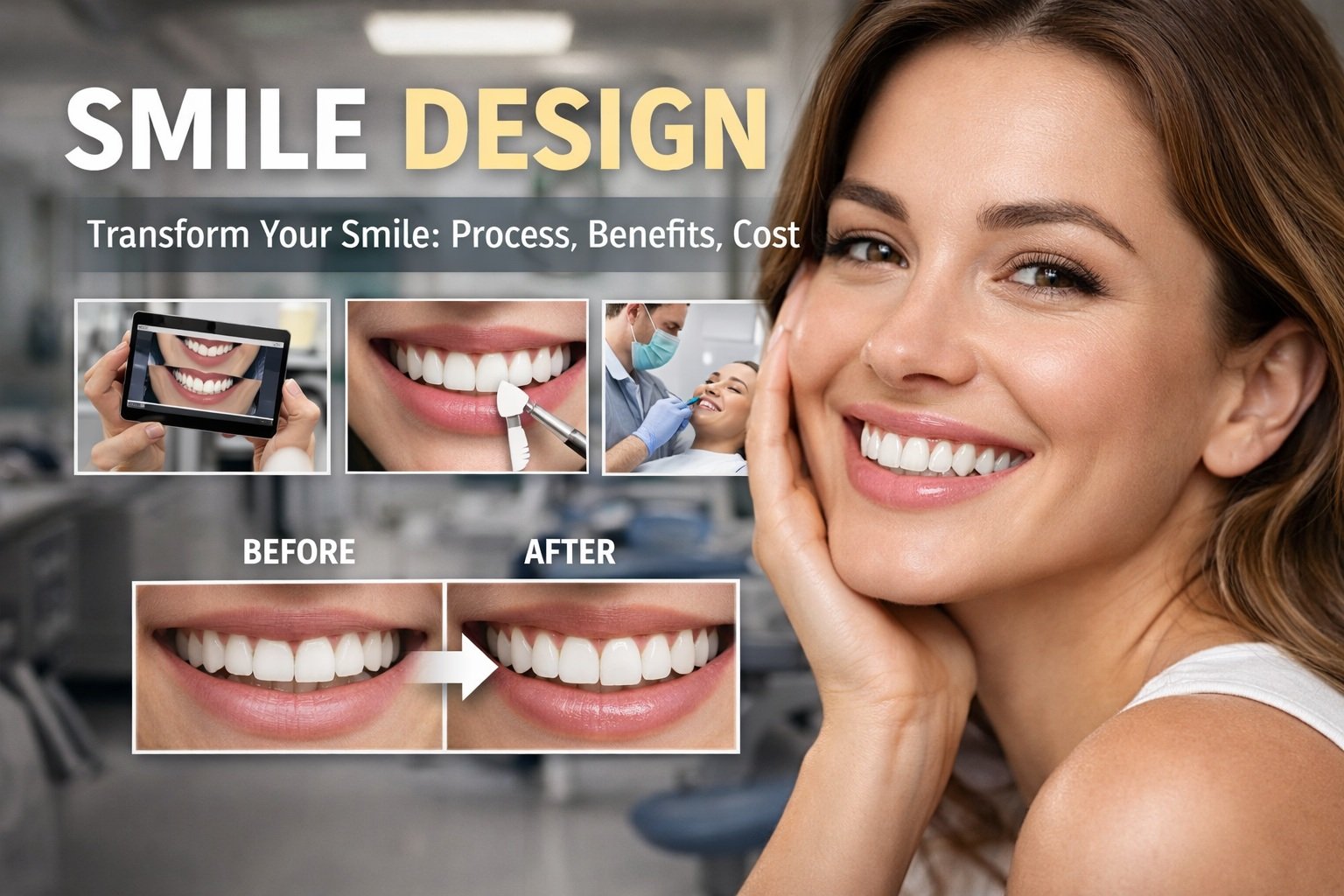
Smile design is a systematic approach to planning a patient's smile based on dental and facial characteristics. It considers factors such as tooth shape, size, colour, alignment, gum display, lip movement, and facial proportions.
Modern smile design often uses digital photography, intraoral scans, digital models, and specialised software. These tools allow dentists to analyse the existing smile and create a proposed treatment plan.
The goal is not simply to create straight or white teeth. A well-planned smile should also look balanced with the patient's facial features.
The main benefits of smile design include better visual planning, improved communication, greater treatment predictability, and more personalised results.
Here are the key benefits in detail.
Smile design gives dentists a structured way to analyse the smile before treatment begins.
Instead of assessing each tooth independently, dentists can evaluate the entire smile. They can study tooth proportions, midline, symmetry, gingival levels, incisal edges, and overall facial harmony.
This approach helps identify which aspects of the smile need attention.
One of the biggest advantages of digital smile design is visualisation.
Digital tools can create a representation of the proposed smile before definitive treatment starts. This gives the dentist a better understanding of the planned changes.
It can also help the patient understand what the treatment aims to achieve.
However, a digital preview should represent a treatment plan rather than a guaranteed final result.
Explaining cosmetic treatment entirely through words can be difficult.
Smile design gives dentists something visual to discuss with patients. The dentist can explain changes to tooth length, shape, position, proportions, and smile line using the proposed design.
This makes conversations about treatment more specific and easier to understand.
Every smile has different characteristics.
A smile design considers individual facial proportions, lip dynamics, tooth visibility, and existing dental conditions. This helps dentists develop a treatment approach that suits the individual case.
For example, the same tooth shape may not work equally well for every face.
Personalisation therefore plays an important role in aesthetic dentistry.
Smile design can also improve communication between the dentist and dental laboratory.
Digital photographs, scans, measurements, and proposed designs can provide the laboratory with additional information about the desired outcome.
This information can support decisions about:
Better information can help the dental team work toward the same treatment objective.
Tooth proportions strongly influence smile aesthetics.
Smile design allows dentists to assess relationships between tooth width and length. It can also help evaluate the proportions between adjacent teeth.
This becomes particularly useful when planning veneers, crowns, bonding, or other aesthetic restorations.
The objective is not necessarily to make every tooth identical. Natural smiles contain controlled variations that contribute to a realistic appearance.
A smile does not exist separately from the face.
Smile design considers how the teeth relate to facial structures, lips, and the overall facial appearance.
Dentists can evaluate elements such as:
This broader analysis can produce a more harmonious treatment plan.
Cosmetic dentistry involves many visual decisions.
Without proper planning, small changes in tooth length, width, position, or colour can affect the overall result.
Smile design allows dentists to assess these factors before committing to definitive restorations.
It does not eliminate clinical uncertainty, but it can make the planning process more controlled and predictable.
Another important benefit involves trial and evaluation.
Depending on the treatment approach, dentists may use diagnostic wax-ups, mock-ups, or provisional restorations to evaluate the proposed design.
This provides an opportunity to assess factors such as tooth length, smile line, phonetics, and overall appearance before final restorations are completed.
Early evaluation can help identify adjustments that may be needed.
Smile design can be useful when a patient needs more than one type of dental treatment.
For example, a comprehensive plan may involve orthodontics, periodontal treatment, implants, crowns, veneers, or tooth whitening.
Planning the smile as a whole helps dentists consider how these treatments should work together.
This can be especially important in complex rehabilitation cases.
No. Smile design primarily concerns aesthetics, but effective planning also considers function and oral health.
A proposed smile must work within the patient's existing dental and biological conditions.
Dentists may need to consider:
A visually attractive design still needs to be clinically appropriate.
Traditional smile planning often relies heavily on physical models, photographs, wax-ups, and clinical measurements.
Digital workflows add another layer of information.
Dentists can combine digital photographs, intraoral scans, facial scans, and digital models. Software can then help analyse and communicate the proposed design.
This creates a more connected workflow between diagnosis, planning, communication, and laboratory production.
Not necessarily.
Smile design can support many aesthetic and restorative cases, but the appropriate approach depends on the patient's clinical condition and treatment goals.
Some cases may require periodontal, orthodontic, restorative, or other treatment before aesthetic procedures can begin.
The dentist should therefore determine whether smile design is appropriate after a proper clinical assessment.
They are related, but they are not the same.
Cosmetic dentistry refers to dental treatments that improve the appearance of teeth and smiles.
Smile design refers more broadly to the planning and analysis process used to determine how the smile should be improved.
Treatments such as veneers, crowns, bonding, whitening, orthodontics, and implants may become part of a smile design plan when clinically appropriate.
The specific treatments depend on the patient's needs. Smile design may contribute to planning for:
Smile design does not mean that every patient needs cosmetic treatment. Sometimes the analysis simply helps determine that minimal treatment is appropriate.
A good smile design should balance aesthetics, function, biology, and individuality.
The goal should not be to copy a celebrity smile or follow one universal tooth shape.
Instead, dentists should consider the patient's facial characteristics, dental condition, expectations, and functional requirements.
The best design is usually the one that looks natural, functions properly, and fits the individual.
Smile design gives dentists a structured way to analyse, plan, and communicate aesthetic dental treatment. Its benefits go beyond creating a digital preview of a future smile.
It can help evaluate proportions, coordinate treatments, improve dentist-laboratory communication, and make aesthetic decisions more predictable.
Most importantly, smile design shifts the focus from treating individual teeth to understanding the smile as part of the whole face.