
Your Gateway to Growth and Success!
Your Gateway to Growth and Success!


Support personnel
info@spafurniture.com
1244003120
"ESTHETICA SPA AND SALON RESOURCES PVT. LTD Plot No. 249, Sector 6, IMT Manesar, Gurgaon, Haryana, India" Gurgaon - 122050
Ayurvedic treatments involve more than the products and techniques used during a session. The treatment table also plays an important role in how the space functions and how comfortable the client feels. An Ayurveda table should suit the treatments offered, give the therapist enough room to work, and fit naturally into the treatment room. Its size, height, surface, and design can all influence how well it fits into the treatment setup, making these details worth considering before you choose one.
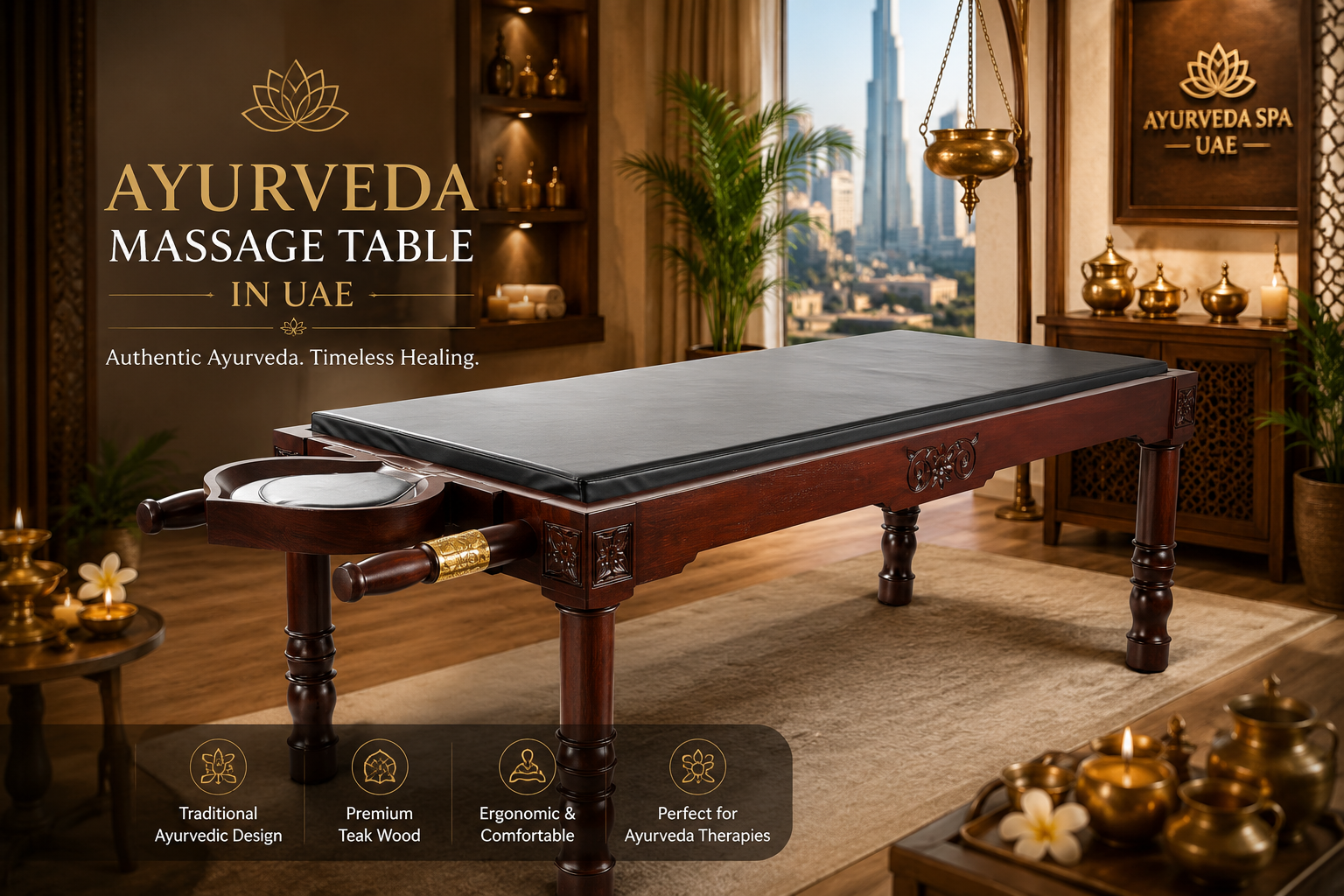
An Ayurveda table is designed for Ayurvedic therapies and treatments that require a client to lie down during the session. Depending on the treatment, the table may need to accommodate oils, herbal preparations, towels, and other treatment materials.
Unlike choosing a table based only on its appearance, it is worth considering the type of Ayurvedic services your spa provides. Abhyanga, for example, involves oil application and massage, while other treatments may require the client to remain in a particular position for a longer period.
The Ayurveda table should therefore suit the treatment rather than simply match the room.
There are several details worth considering before making a choice:
The table should give clients enough space to lie comfortably while leaving sufficient room for the therapist to move around it. Measure the treatment area before buying and consider the space needed for stools, trolleys, storage, and other equipment.
A table that takes up too much floor space can make a treatment room feel crowded. On the other hand, choosing a very compact option without considering the treatment requirements may restrict how the therapist works.
Therapists may spend several hours working around the treatment table. The height should therefore allow them to work without repeatedly bending or stretching.
Consider the height of the therapist, the treatments being provided, and whether the table allows any adjustment. If several therapists share the same room, an adjustable Ayurveda table may also make it easier for each person to find a suitable working position.
Ayurvedic treatments can involve oils, herbal preparations, and other materials that come into contact with the treatment surface. The table should have a surface that can be cleaned properly between clients.
Ask the supplier about the recommended cleaning method and which products can be safely used on the upholstery or surface. Avoid choosing a design with unnecessary gaps or difficult-to-reach areas where residue could collect.
A treatment table needs to remain stable while a client is getting on, lying down, or getting off. Check the frame, legs, joints, and overall construction before making a purchase.
The table should also be suitable for the weight capacity specified by the manufacturer. This is particularly important for a professional spa where the furniture will be used regularly.
Different Ayurvedic treatments may require different client positions and therapist movements. Think about your treatment menu before choosing furniture.
If your spa offers oil-based massage treatments, consider how the table will handle regular exposure to oils and cleaning. If treatments involve extended sessions, client comfort becomes particularly important.
An Ayurveda table should also leave enough space for the therapist to reach the client without having to work from an awkward position. The surrounding area matters just as much as the table itself.
An Ayurvedic treatment room may need more than one piece of specialist furniture. Depending on the services offered, you may need stools, trolleys, storage units, wash areas, or other equipment.
Think about where each item will be placed before installation. The therapist should be able to reach towels, oils, and treatment materials without constantly leaving the client.
For spas that also offer pedicure services, furniture choices will be different. A copper pedicure bowl, for example, can suit a treatment area where foot soaking forms part of the service. Its material and finish can also complement interiors that use warm, natural tones.
The key is to choose each piece according to the service it supports rather than trying to make every treatment use the same type of furniture.
The treatment table is part of the overall room, so its finish should work with the rest of the space. Natural wood tones, neutral upholstery, and understated finishes can suit wellness interiors, depending on the design of the spa.
However, appearance should not be the only consideration. A beautiful table still needs to fit the treatment room and support the services being offered.
Think about the colour and finish of nearby furniture as well. If the room already has wooden furniture and natural materials, an Ayurveda table with a complementary finish can create a more coordinated setting.
Treatment furniture needs a consistent cleaning routine, particularly when oils and other preparations are used regularly.
Before buying, check the manufacturer’s care instructions. Find out how the surface should be cleaned, whether specific products should be avoided, and how spills should be handled.
It is also worth considering the areas around the table. Floors, stools, trolleys, and storage surfaces should be easy for staff to access and clean. A well-organised treatment room makes it easier to maintain a consistent routine between appointments.
The right choice depends on your treatments, available space, therapist requirements, and interior design. There is no need to choose furniture simply because it looks traditional or matches the name of the treatment.
Start by listing the Ayurvedic services you provide. Then consider the client positions involved, the materials used during treatment, and the amount of space available around the table.
For a spa offering several services, it can also help to separate furniture decisions by treatment area. An Ayurveda table can be selected for Ayurvedic therapies, while dedicated furniture can be chosen for massage, facials, or pedicures.
Choosing an Ayurveda table is easier when you start with the treatments rather than the furniture itself. Consider how clients will be positioned, how therapists will work, how the surface will be cleaned, and how much room the table will leave for movement.
The same approach can be applied to other treatment furniture. A copper pedicure bowl may suit a foot treatment area, while a suitable pedicure chair can provide the seating required for longer appointments. Each piece should have a clear place within the treatment setup.
Before buying, measure the room, review the treatment menu, check the manufacturer’s specifications, and consider the cleaning routine. This can help you choose furniture that fits both the needs of your spa and the experience you want to create for clients.