
Your Gateway to Growth and Success!
Your Gateway to Growth and Success!


Angela
angelaalex11223@gmail.com
+923269367102
13th Street. 47 W 13th St, New York, NY 10011, USA. London - 9870
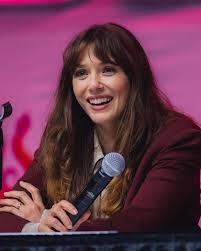
Elizabeth Olsen's rise to fame did not follow the unsurprising circular path often associated with Hollywood success stories. There was no overnight breakthrough fueled by persistent exposure campaigns or a carefully designed celebrity persona. Instep, her travel unfurled continuously, molded by thoughtful choices, calm determination, and a profound regard for narrating. Even though she grew up in the shadow of colossal acclaim, Elizabeth Olsen carved a way that was particularly her own—one characterized by make or maybe than comfort, by limitation or maybe than spectacle.
Her career reflects an uncommon balance between autonomy and standard victory, between intimate character thoughts and worldwide blockbusters. Over time, she has advanced from a promising newcomer in free cinema to one of the most recognizable entertainers of her era, all while maintaining a grounded sense of self.
Growing Up Close to Notoriety, However, Separated From It
Elizabeth Chase Olsen was born on February 16, 1989, in Sherman Oaks, California. Popularity was, as of now, a commonplace presence in her family. Her more seasoned sisters, Mary-Kate and Ashley Olsen, were among the most recognizable child stars of the 1990s, having built an empire from Elizabeth before it got to its current size. Came, trend industry discussions were not outside concepts in her early life click here.
Yet Elizabeth's relationship with the excitement world was never clear. Observing her sisters' intense, open investigation at a young age gave her a front-row seat to both the rewards and the costs of celebrity. Whereas she sometimes showed up in small ventures associated with their work, she did not promptly pursue acting with the same enthusiasm. In step, she kept up a cautious remove, watching, or maybe hurrying, toward the spotlight. This early introduction gave her viewpoint. She caught on that victory in amusement came with trade-offs, and that perceivability might be both engaging and overpowering. That mindfulness would afterward impact how she drew closer to others, empowering her to move more keenly rather than impulsively.
Finding Her Own Voice Through Education
Elizabeth Olsen's commitment to acting developed over her early years; she saw a path rather than a vocation, and studied acting at New York University's Tisch School of the Arts, where she immersed herself in a training program that emphasized method, enthusiastic genuineness, and classical traditions. Her time at Tisch allowed her to step away from desires tied to her surname and focus on developing skills.
She moreover spent time studying at the Moscow Art Theatre School in Russia, an experience that prepared her for thorough strategies grounded in convention and emotional authenticity. The emphasis on internal truth and taught planning resonated with her, shaping her understanding of execution as a process requiring both responsibility and vulnerability.
This period of instruction strengthened her resolve to be taken seriously as a performer, and, instead of depending on industry associations or title recognition, she focused on sharpening her skills. By the time she completed her considerations, Elizabeth Olsen had developed a solid sense of creative character, one grounded in respect for narrative and character-driven work.
A Breakthrough That Felt Earned
Elizabeth Olsen's breakout role came in 2011 with the film "Martha Marcy May Marlene". Her depiction of a youthful lady getting away from a controlling religion was frequent, nuanced, and profoundly unsettling. The execution requested passionate accuracy and restraint, and Olsen delivered with momentous certainty for a first significant role.
The film debuted at the Sundance Film Festival, where it quickly became the most talked-about film. Faultfinders lauded Olsen's ability to convey injury and confusion without acting. Her execution tied down the film, changing it into a hint mental representation or maybe than a sensationalized narrative.
What made this breakthrough especially striking was its nuance. Olsen did not report herself with fantastic signals or emotional discourses. Instead, she let quiet, body dialect, and passionate shifts carry the weight of the story. The industry took note, not because of her family foundation, but because her ability was undeniable.
In the wake of "Martha Marcy May Marlene," Olsen received broad acclaim and numerous award nominations. More vitally, she earned validity. She was no longer presented as "the more youthful sister of," but as an on-screen character with a particular voice and presence.
Navigating Free Cinema
Following her breakthrough, Elizabeth Olsen made a series of choices that strengthened her commitment to independent storytelling. She floated toward movies that investigated complex connections, ethical equivocality, and passionate helplessness. Ventures such as "Silent House", "Liberal Arts", and "Kill Your Darlings" showcased her eagerness to try with tone and genre.
These movies shifted in scope and tone, but they shared a standard thread: Olsen's performances were reliably keen and grounded. She showed an intuition for selecting parts that challenged her, or perception. Indeed, when a film received mixed reviews, her work often stood out as a point of strength.
This stage of her career permitted her to investigate diverse aspects of her acting. She depicted characters who were dubious, clashing, and seeking meaning. Rather than chasing routine driving parts, she grasped characters that felt true and candidly rich.
Her nearness in free cinema made a difference, establishing her notoriety as a genuine entertainer. She got to be associated with movies that prioritized substance over style, reinforcing the idea that she was building a career with intention.
Entering the World of Blockbusters
Elizabeth Olsen's move into standard cinema came with her casting as Wanda Maximoff in the Wonder Cinematic Universe. Presented in "Avengers: Age of Ultron", the part marked a critical step in scale and visibility. All of a sudden, she became part of one of the most fruitful film institutions in history, reaching audiences worldwide.
For a few on-screen characters, such a move can be overpowering or career-defining in a constraining way. For Olsen, it became an opportunity to bring passionate profundity to a genre often associated with exhibition. Wanda Maximoff was not essentially a superhero; she was a character formed by misfortune, injury, and yearning. Olsen drew closer to the part with the same earnestness she brought to her autonomous work.
Over numerous movies, she created Wanda into one of the most candidly complex figures in the Wonder universe. Her execution included layers of powerlessness and concentrated, lifting the character past conventional sort desires. Groups of onlookers reacted to this profundity, interfacing with Wanda's battles on a human level.
Rather than eclipsing her prior work, the Wonder movies extended Olsen's reach while allowing her to maintain her imaginative judgment. She demonstrated that it was conceivable to take part in large-scale excitement without relinquishing nuance.
Redefining the Superhero Narrative
Elizabeth Olsen's portrayal of Wanda Maximoff reaches new heights in the TV series "WandaVision". The extent spoken to a strong takeoff from ordinary superhero narrating, mixing classic sitcom styles with mental dramatization. At its center, the arrangement investigated melancholy, dissent, and the search for control in the face of loss.
Olsen's execution was central to the show's victory. She explored moving tones, comedic timing, and passionate destruction with exceptional deftness. The part required her to move consistently between times, styles, and passionate states, frequently inside a single episode.
Critics and onlookers alike lauded her work, recognizing it as one of the most compelling exhibitions of its genre. "WandaVision" allowed Olsen to fully showcase her run, reaffirming her ability to portray complex characters across formats.
The arrangement, also, reshaped recognition of what superhero stories might be, illustrating that enthusiastic closeness and experimentation may flourish within standard institutions. Olsen's commitment was instrumental in that evolution.
Balancing Perceivability and Privacy
Despite her growing acclaim, Elizabeth Olsen has consistently maintained a sense of privacy. She is specific about her appearance and cautious with social media, focusing on her claims. This approach reflects her desire to keep her personal life separate from her professional identity.
Olsen has spoken openly about the significance of boundaries, especially given her early exposure to celebrity culture. She understands how rapidly open intrigue can shift from reverence to interruption, and she has taken steps to preserve her sense of normalcy.
This adjustment has indeed allowed her to stay grounded as her profile has developed. Rather than creating a larger-than-life persona, she presents herself with realness and restraint—interviews center on making, making collaboration, and narration rather than exhibition. In a period characterized by consistent perceivability, Olsen's measured approach stands out. It reinforces the idea that victory does not require total control and that security can coexist with prominence.
Expanding Her Run Past One Identity
While Wanda Maximoff remains one of her most recognizable parts, Elizabeth Olsen has proceeded to broaden her work. She has taken on ventures in film and TV that challenge desires and investigate unused regions. Exhibitions in movies such as "Wind River" and "Ingrid Goes West" permitted her to step into darker, more unsettling narratives.
In these parts, she illustrated a readiness to confront awkward subjects and ethically complex characters. Her exhibitions frequently resist simple categorization, welcoming viewers to engage with uncertainty rather than promoting clear resolutions.
This commitment to assortment has made a difference in her career, preventing it from becoming barely defined. Rather than being restricted to a single type or prime example, Olsen has maintained adaptability, moving smoothly between free dramas, thrillers, and standard ventures. Her choices reflect an understanding that the life span in acting depends on flexibility. By persistently seeking out unused challenges, she keeps her work fresh and relevant.
The Impact of Collaboration
Throughout her career, Elizabeth Olsen has emphasized the significance of collaboration. She often talks about the esteem of working with executives, scholars, and individual performing artists who challenge her viewpoint. This openness has improved her exhibitions, allowing her to grow through shared creative experiences.
She has worked with producers known for their distinct voices, taking on ventures that require belief and vulnerability. These collaborations have frequently led to exhibitions that feel profoundly personal, shaped by mutual respect and creative exchange.
Cultural Affect and the Group of onlookers Connection
Elizabeth Olsen's exhibitions resonate with audiences because they feel grounded in enthusiastic truth. Whether depicting a lamenting superhero or a vexed youthful lady in a free dramatization, she brings truthfulness and subtlety to her parts. This realness cultivates association, welcoming watchers to see themselves in her characters.
Her work has moreover contributed to broader discussions on representation, mental well-being, and enthusiastic complexity in narrating. By grasping parts that investigate defenselessness and inner struggle, she has helped in normalizing accounts that prioritize emotional depth. Olsen's social Affect amplifies past person exhibitions. She speaks to a demonstration of victory that values reflection and astuteness, offering an alternative to more sensationalized celebrity narratives.
Looking Toward the Future
As Elizabeth Olsen advances in her career, her future is characterized by plausibility rather than consistency. She has illustrated a readiness to advance, to take risks, and to investigate modern forms of narration. Whether through film, TV, or other inventive wanderings, she remains committed to growth.
Her travel recommendations suggest that she continue seeking ventures that challenge her understanding of character and accounting. Rather than settling into a settled character, she shows up with an expectation of remaining open to change. This openness is the most compelling aspect of her fame. It reflects a craftsman who sees victory not as a goal, but as a continuous handle formed by interest and courage.
Conclusion: A Highlight Earned, Not Claimed
Elizabeth Olsen's journey to fame is a testament to the power of persistence, teaching, and genuineness. In an industry frequently characterized by speed and display, she has chosen a diverse path—one that respects making and individual keenness. Her rise was not sudden or made, but slow and earned through steady dedication.
From her early days exploring the complexities of developing close-up acclaim, to her breakthrough in autonomous cinema, to her commanding presence in global institutions, Olsen has remained true remained Elizabeth remained instinct. Elizabeth's story is about identity, about craft, about a craftsman's choice, about perception and choice, about choosing indifferently.