
Your Gateway to Growth and Success!
Your Gateway to Growth and Success!


Sanchi Jain
sanchidigital54@gmail.com
8929405089
Ashok Vihar New Delhi - 110052
In today’s digital era, SEO plays a critical role in improving your website’s visibility, driving organic traffic and increasing brand credibility. Having a strong online presence is no longer optional – it’s essential. SEO isn’t about tricks or shortcuts. It’s about understanding how people search, what they need, and how to deliver the right answers at the right time. When done correctly, SEO helps your website grow steadily, attract genuine visitors, and build trust—without relying only on paid advertisements.
SEO is not about chasing algorithms or finding shortcuts. It is a core part of digital marketing that focuses on understanding people—how they search, what they need, and how businesses can genuinely help them. While trends and platforms keep changing, SEO remains one of the most reliable digital marketing strategies because it connects brands with users who are already searching for answers. When SEO is done the right way, it strengthens your overall digital marketing efforts by improving visibility, building trust, and bringing consistent, high-quality traffic without depending only on paid advertisements.
UNDERSTANDING SEO AND ITS IMPORTANCE ?
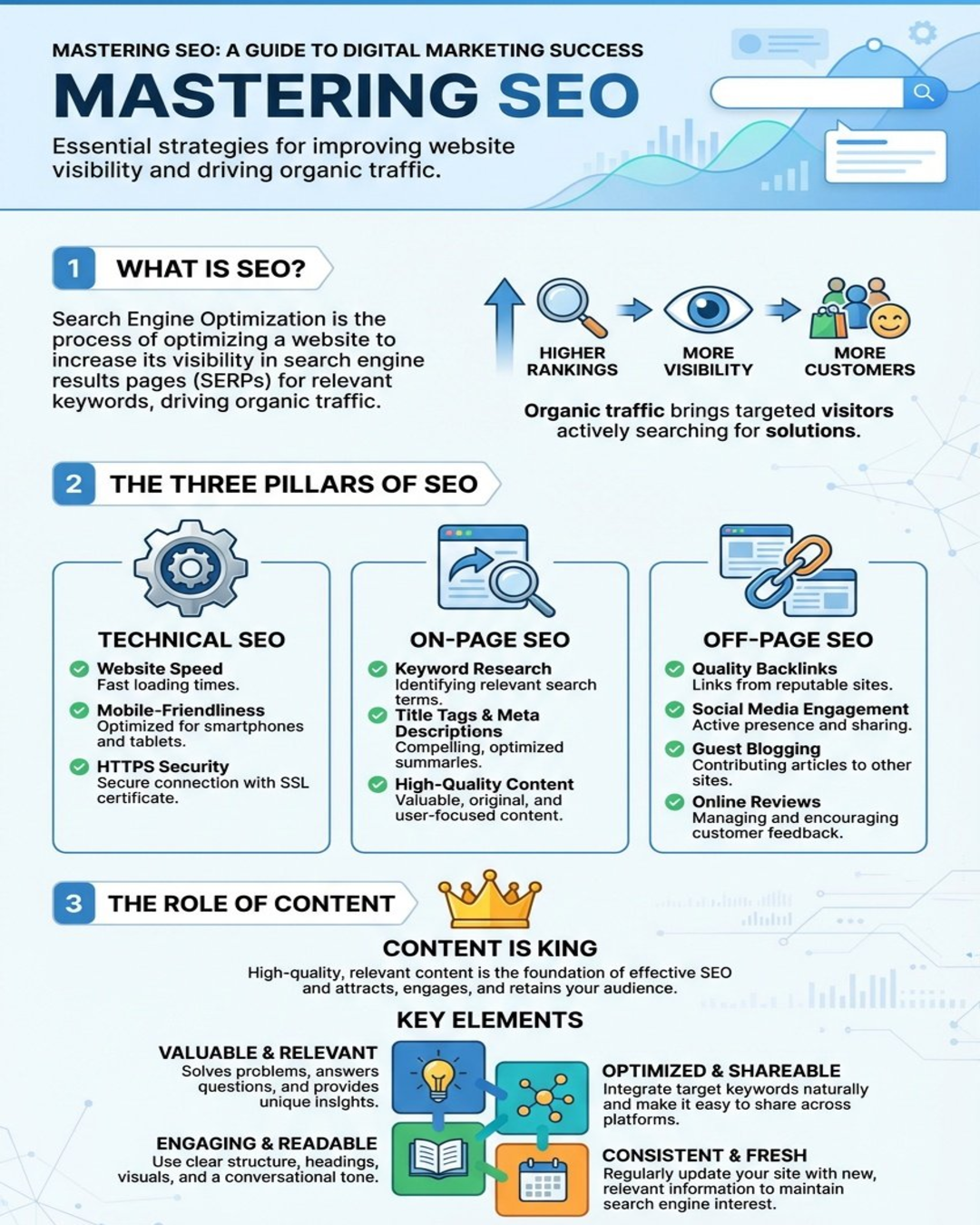
SEO stands for Search Engine Optimization . It is the practice of optimising your website so it ranks higher on search engine result pages. By leveraging SEO, you can make your website more visible. When users search for something online, they usually click one of the first few results. If your website does not appear on the first, there is a high chance it will be ignored.
One of the biggest advantages of SEO is organic traffic. These are users who come to your website naturally because they found you through a search—not because you paid for an ad. Organic visitors are often more engaged and more likely to trust your brand.
THE THREE CORE PILLARS OF SEO
1. TECHNICAL SEO
Technical SEO is everything happening in the background of your website. Visitors may not notice it, but search engines definitely do.
A slow website frustrates users. A site that doesn’t open properly on mobile loses traffic instantly. Technical SEO focuses on fixing these problems.
Key components include:
· Website Speed: Fast-loading websites improve user experience and boost rankings.
· Mobile-Friendliness: With mobile-first indexing, Google prioritizes mobile-optimized sites.
· Secure Protocols (HTTPS): Security is a ranking factor; having HTTPS is essential.
2. ON PAGE SEO
On-page SEO is what most people think of when they hear “SEO.” It includes your content, keywords, headings, and layout.
Instead of stuffing keywords everywhere, the goal is to write naturally. Your content should answer questions, solve problems, and guide readers. Keywords should fit smoothly into the text, not feel forced.
3. OFF PAGE SEO
Off-page SEO is about what others say about you online. Search engines see links from other websites as recommendations. The more trustworthy the source, the stronger the signal.
Off-page SEO involves:
· Quality backlinks from relevant websites
· Guest blogging
· Social media sharing
· Brand mentions across platforms
CONTENT: THE HEART OF SEO SUCCESS
Content is often called the king of SEO for good reason. High-quality content serves as the foundation of both on-page and off-page SEO strategies.
Effective SEO content should:
· Address user intent clearly
· Use keywords naturally without overstuffing
· Include visuals like images or videos
· Be updated regularly to stay relevant
Consistency is key. Publishing valuable content regularly helps build authority and trust over time. When users spend more time reading your content, it sends a positive signal to search engines. Overtime, even publishing one valuable blog can bring consistent traffic.
MEASURING SEO PERFORMANCE
SEO is an ongoing process, not a one-time task. To understand whether your strategy is working, it is important to track performance metrics.
Some important SEO metrics include:
· Growth of organic traffic
· Keyword ranking improvements
· Bounce rate and longer time spent on pages
· Conversion rates and higher engagement
·
Tools like Google Analytics and Google Search Console help monitor progress and identify areas for improvement. Regular analysis allows businesses to refine strategies and stay ahead of competitors.
COMMON SEO MISTAKES TO AVOID
Many websites fail to achieve results due to common SEO mistakes. Avoiding these errors can save time and effort:
· Keyword stuffing instead of natural usage
· Ignoring mobile users
· Publishing low-quality or duplicate content
· Poor website navigation
· Neglecting local SEO for location-based businesses
SEO success comes from patience, consistency, and following best practices rather than shortcuts.
FINAL THOUGHTS: SEO IS A LONG TERM GAME WORTH PLAYING
SEO is not just a digital marketing tactic—it’s a long-term investment. When done right, it builds visibility, credibility, and sustainable growth.
Instead of trying to impress algorithms, focus on helping users. Create meaningful content, optimize your website properly, and build genuine connections online. Over time, search engines will reward you.
If you want lasting success in digital marketing, mastering SEO is not optional—it’s essential.